
Publication of ‘Workers in the Eye of the Storm’ marks anniversary of Storm Éowyn
Union’s demands include mandatory alert-based responses and ‘climate leave’
Trade union Unite, which organises workers throughout the economy, this morning (Thursday) launched a new policy toolkit, In the Eye of the Storm. The document includes a summary of responses to a survey of Unite members carried out in the wake of Storm Éowyn last January together with a set of proposals designed to protect workers’ health, safety and incomes during and in the immediate aftermath of extreme weather events. Unite’s plan also includes proposals to protect workers from extreme temperature events.
Unite general secretary Sharon Graham said: “Workers are literally in the eye of the storm, and we urgently need specific legislation and regulations to protect workers from the impacts of extreme weather events. Workers must not pay the price for a climate crisis not of their making.
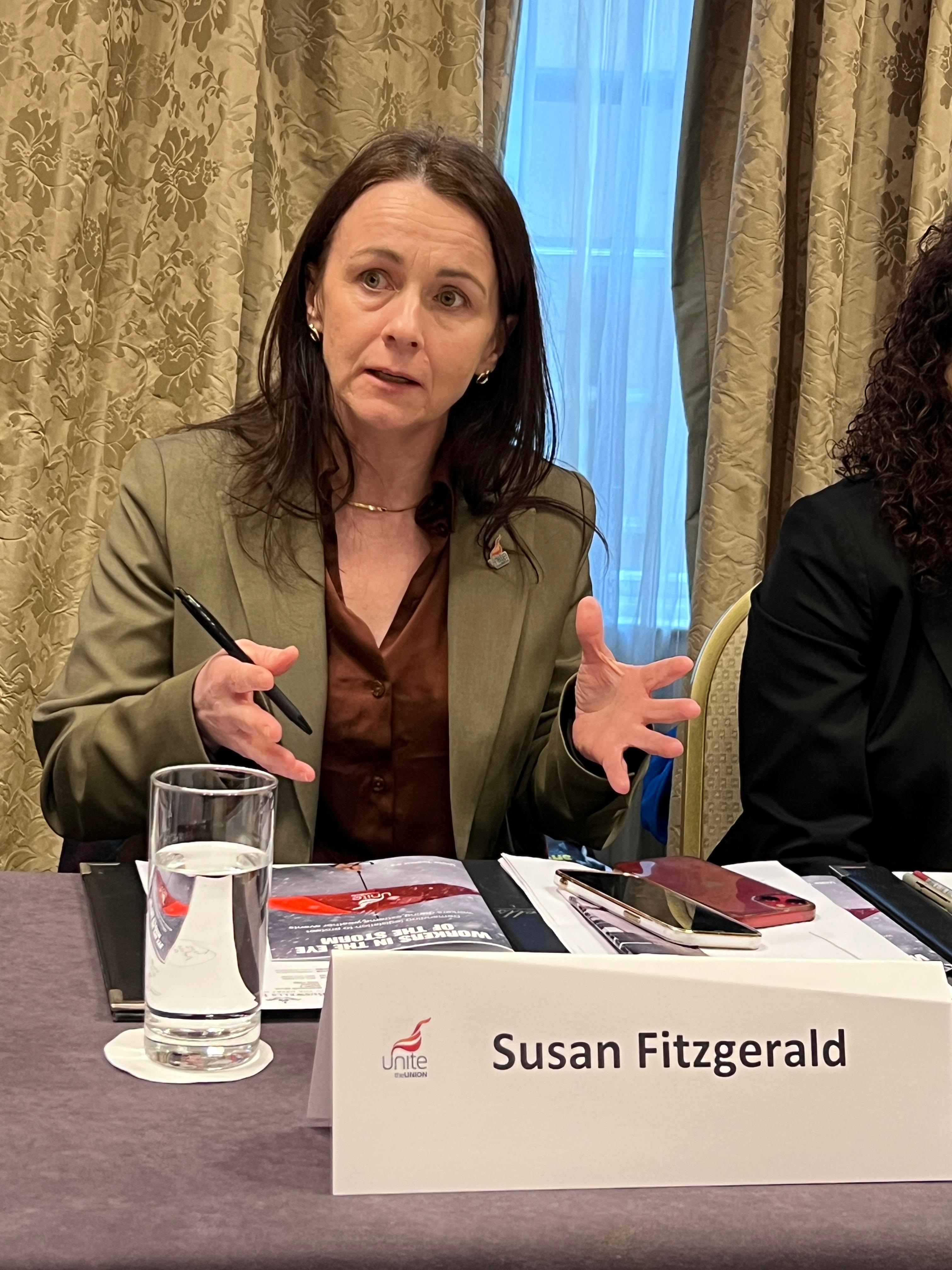
Speaking at the launch, Unite’s Irish Secretary Susan Fitzgerald said:
“The scientific evidence is clear: 2025 was the third warmest year on record, and for Ireland that means an increased risk of extreme weather events such as storms or flooding. We urgently need to update our health and safety legislation to ensure that protections for workers keep up with the science”.
Phil Ní Sheaghdha, general secretary of the Irish Nurses and Midwives Organisation and president of the Irish Congress of Trade Unions, said:
“When storms strike, many workers are advised to work from home where possible. But many others can’t work from home, either because their employer can’t or won’t facilitate that or because they are essential workers. All employers must be compelled to prioritise staff safety and ensure that workers do not pay the price – financially or in terms of their wellbeing – for extreme weather events”.
The need for updated health and safety regulations was highlighted by the responses to Unite’s survey after Storm Éowyn, which found that 53 per cent, or over half, of those who worked outdoors during the storm felt their employer had not taken all reasonable precautions to make their work safe.
In 2018, Unite member Matthew Campbell was killed while working outdoors during Storm Ali. Matthew’s father Mark was among the speakers at today’s launch and said:
“During Storm Ali, our 24-year-old son Matthew was killed by a tree which blew down, crushing him while working. We all know weather events are getting more severe and more frequent. Legislation needs to be updated to protect workers, and we need a consistent approach to this north and south.”
Unite’s policy demands include:
- A legal obligation on employers to implement graduated alert-based responses, with non-essential outdoor work ceasing during amber alerts and all non-essential work ceasing during red alerts
- A legal requirement that, where the above provisions require work to cease, workers be paid as usual for the day/ days in question
- Paid ‘climate leave,’ based on the legislation adopted in Spain following the Valencia floods, if extreme weather makes it impossible to travel to work, with the possibility of extending this period until conditions improve
- Maximum temperatures at which work must cease
- Recognition of temperature-related illnesses as occupational diseases as recommended by the International Labour Organisation
Unite launches plan to protect workers from Extreme Weather impacts
Publication of ‘Workers in the Eye of the Storm’ marks anniversary of Storm Éowyn
Union’s demands include mandatory alert-based responses and ‘climate leave’
Trade union Unite, which organises workers throughout the economy, this morning (Thursday) launched a new policy toolkit, In the Eye of the Storm. The document includes a summary of responses to a survey of Unite members carried out in the wake of Storm Éowyn last January together with a set of proposals designed to protect workers’ health, safety and incomes during and in the immediate aftermath of extreme weather events. Unite’s plan also includes proposals to protect workers from extreme temperature events.
Unite general secretary Sharon Graham said: “Workers are literally in the eye of the storm, and we urgently need specific legislation and regulations to protect workers from the impacts of extreme weather events. Workers must not pay the price for a climate crisis not of their making.
Speaking at the launch, Unite’s Irish Secretary Susan Fitzgerald said:
“The scientific evidence is clear: 2025 was the third warmest year on record, and for Ireland that means an increased risk of extreme weather events such as storms or flooding. We urgently need to update our health and safety legislation to ensure that protections for workers keep up with the science”.
Phil Ní Sheaghdha, general secretary of the Irish Nurses and Midwives Organisation and president of the Irish Congress of Trade Unions, said:
“When storms strike, many workers are advised to work from home where possible. But many others can’t work from home, either because their employer can’t or won’t facilitate that or because they are essential workers. All employers must be compelled to prioritise staff safety and ensure that workers do not pay the price – financially or in terms of their wellbeing – for extreme weather events”.
The need for updated health and safety regulations was highlighted by the responses to Unite’s survey after Storm Éowyn, which found that 53 per cent, or over half, of those who worked outdoors during the storm felt their employer had not taken all reasonable precautions to make their work safe.
In 2018, Unite member Matthew Campbell was killed while working outdoors during Storm Ali. Matthew’s father Mark was among the speakers at today’s launch and said:
“During Storm Ali, our 24-year-old son Matthew was killed by a tree which blew down, crushing him while working. We all know weather events are getting more severe and more frequent. Legislation needs to be updated to protect workers, and we need a consistent approach to this north and south.”
Unite’s policy demands include:
- A legal obligation on employers to implement graduated alert-based responses, with non-essential outdoor work ceasing during amber alerts and all non-essential work ceasing during red alerts
- A legal requirement that, where the above provisions require work to cease, workers be paid as usual for the day/ days in question
- Paid ‘climate leave,’ based on the legislation adopted in Spain following the Valencia floods, if extreme weather makes it impossible to travel to work, with the possibility of extending this period until conditions improve
- Maximum temperatures at which work must cease
- Recognition of temperature-related illnesses as occupational diseases as recommended by the International Labour Organisation






 Unite the Union, Ireland Region